20 FREE WAYS FOR PICKING THE SCEYE PLATFORM
Sceye and Softbank Within The Haps Partnership For Japan
1. This Partnership is More Than Connectivity
If two organizations with different backgrounds such as a New Mexican-based corporation for stratospheric space and one of Japan's most prestigious telecoms conglomerates — agree to create a national network of high-altitude platforms, this is more than broadband. The Sceye SoftBank partnership represents a solid bet on the possibility of stratospheric networks becoming a lasting, revenue-generating section of national Telecommunicationsnot a pilot venture or a demonstration of concept, but the starting of a major commercial rollout that has a specific timeline and a broader ambition for the nation.
2. SoftBank has a rationale to Support Non-Terrestrial Networks
SoftBank's involvement in HAPS did not spring up out of thin air. The geography of Japan — thousands of islands, mountainous terrain and coastal areas frequently struck by earthquakes and typhoons This creates a constant coverage gaps that the ground infrastructure alone isn't enough to close. Satellite connectivity can help, however delay and cost are still the primary components for mass-market application. A stratospheric layer that spans 20 km, which is able to hold position above specific regions, and delivering high-speed broadband with low latency to ordinary devices, can solve a number problems at the same time. For SoftBank investing in stratospheric platform is a natural extension of a strategy already in place to diversify its network beyond terrestrial dependency.
3. Pre-Commercial Services slated for Japan in 2026 – Signal Real Momentum
The key element that distinguishes this agreement from previous HAPS announcements is the goal of commercializing pre-commercial services in Japan in 2026. It's not a vague and uncertain promise, it's a particular operational milestone, with regulatory, infrastructure, and commercial implications attached to it. Pre-commercial status means that the platforms need to be performing station-keeping reliably, providing reliable signal quality, as well as linking to SoftBank's current network architecture. The fact that this date has been publicly stated indicates the parties have completed enough necessary regulatory and technical hurdles in order to treat it as an actual objective rather than aspirational marketing.
4. Sceye Brings Endurance and Payload Capacity That Other Platforms Struggle to match
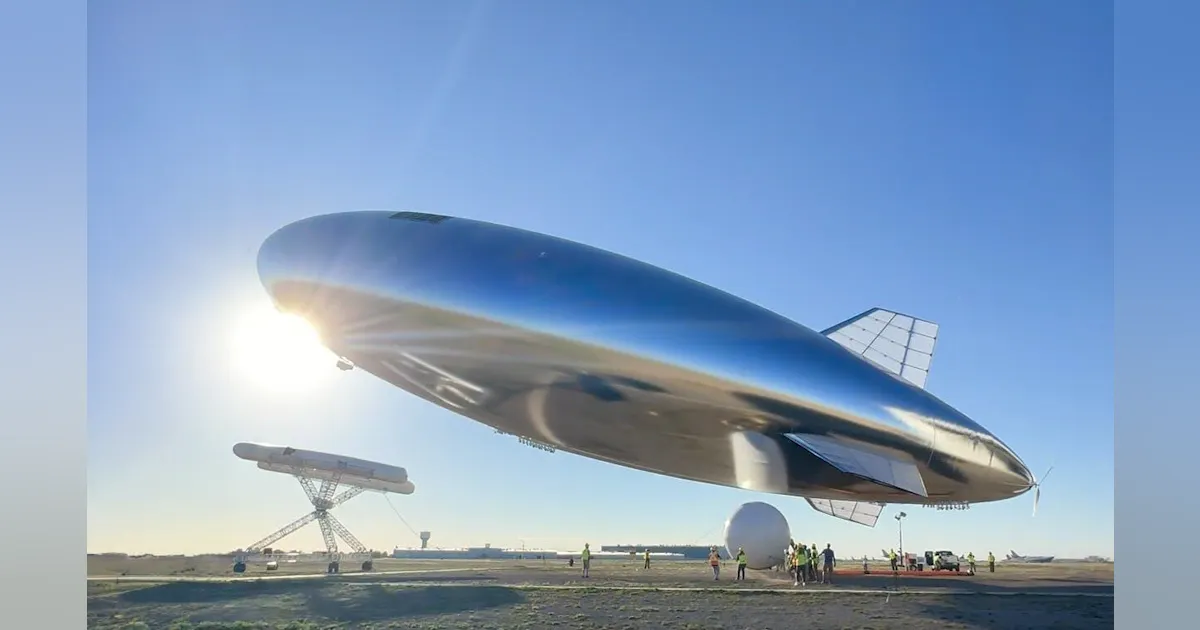
Not all HAPS aircraft is built to work on a nationwide commercial network. Fixed-wing solar planes tend to use payload capacity as a substitute for an altitude-based performance, which limits how much telecommunications or observation equipment they can carry. Sceye's lighter-than-air airship design takes a different approach — buoyancy supports the weight of the aircraft, which means that available solar energy is used for propulsion as well as station-keeping and charging onboard systems rather that just staying in the air. This design choice can result in meaningful advantages in payload capacity and endurance of missions that matter in the event of trying to remain in continuous coverage over heavily populated regions.
5. The Platform's Multimission Capability Makes the Economics Work
One of the facets that are not well-known of the Sceye method is the fact that one platform doesn't have to justify its operational cost solely on the basis of telecoms revenue. A vehicle that is capable of delivering stratospheric internet can also house sensors to monitor greenhouse gases as well as disaster detection along with earth-observation. In a country such as Japan who is at a high risk for natural hazards and has a national policy of emissions monitoring, this multi-payload system makes it much simpler to justify at a government as well as a commercial level. The telecoms antenna as well as the temperature sensor aren't competingThey're sharing a technology that's already up there anyway.
6. beamforming as well as HIBS Technology Enhance the Signal Commercially Usable
In order to offer broadband service from 20 miles away, it isn't simply a matter of pointing an antenna downward. The signal needs to be controlled, shaped and controlled dynamically in order to serve users efficiently across a large area. Beamforming technology allows the telecom antenna in the stratospheric for the focus of signal energy the most needed areas, instead of broadcasting in a uniform manner without wasting power over empty seas or areas that are uninhabited. This is combined with the the HIBS (High-Altitude IMT Base Station) standards, which ensure that the platform is compatible with the existing 4G or 5G device ecosystems, this means ordinary smartphones are able to connect without special equipment — a critical requirement for any mass-market implementation.
7. The Japan's Island Geography Is an Ideal Test Case for the entire world.
If stratospheric communication works at an accelerated rate in Japan the pattern becomes exportable to every other nation with comparable coverage challenges -and that includes the majority of the world. Indonesia, the Philippines, Canada, Brazil and other Pacific islands have their own versions of the problem: populations distributed across terrain that thwart conventional infrastructure economics. Japan's mix of technological sophistication and capacity for regulation, along with real-world need makes it a top opportunity to test a nation-wide network built on stratospheric platforms. How SoftBank and Sceye can demonstrate will help deployments across the globe for a long time.
8. This New Mexico Connection Matters More Than It Appears
Sceye operating from New Mexico isn't incidental. New Mexico offers high-altitude test conditions, established facilities for aerospace, as well as airspace suitable for the type of extended flight testing that stratospheric vehicle development requires. As one of the most serious aerospace companies within New Mexico, Sceye has developed its research and development programs in an environment that supports genuine technological iteration rather than release cycles. The difference between announcing a HAPS platform and actually operating one reliably for weeks at a time is enormous, and the New Mexico base reflects a company that has been doing insignificant work necessary to close that gap.
9. The Founder's Vision is the primary driver behind the Partnership's Long-Term Ambition
Mikkel Vestergaard's work experience which is founded on applying technology to environmental and humanitarian challenges — has visibly had an impact on the kind of business Sceye hopes to create and the reasons. The collaboration with SoftBank doesn't simply a telecoms business. Sceye's focus of disasters detection monitoring in real-time, and connectivity to regions with limited access is a reflection of a guiding principle that the stratospheric internet should serve broad-based social functions alongside commercial ones. That premise has likely contributed to making Sceye the ideal partner with a firm such as SoftBank, which is in a strict regulatory and public space where corporate mission is a significant factor.
10. 2026 will be the year that where the Stratospheric Tier Either Proves Itself or Resets Expectations
The HAPS sector has been promising commercial deployment for much longer than observers can remember. What is unique about this Sceye and SoftBank timeline significant is that it assigns one specific country, specific operator, and an exact service milestone to a specific year. If commercial pre-commercial services in Japan are launched on time and operate as specified 2026 will be as the time when connectivity across the stratosphere shifted from promising technology to functioning infrastructure. If it slips, the sector is likely to be asked more questions concerning whether the technical challenges are as sorted out like recent reports indicate. The partnership has made a mark in the sky that's worth keeping an eye on. View the top sceye haps payload capacity for more advice including softbank sceye partnership, sceye haps softbank partnership, sceye haps softbank partnership, 5G backhaul solutions, Stratospheric infrastructure, Stratospheric broadband, Sceye News, 5G backhaul solutions, softbank group satellite communication investments, sceye haps payload capacity and more.

Mikkel Vestergaard's Vision Behind Sceye's Aerospace Mission
1. Founding Vision is a neglected factor of Aerospace Company Outcomes
The aerospace sector is comprised of two broad categories for companies. The first one is based on a technology that is looking for applications as well as an engineering expertise in search of a marketplace. It starts with a problem that matters and works backwards towards the technology to solve it. The distinction seems abstract when you think about what each type of business actually creates along with the kind of partnerships it makes and the way it decisions when resources are limited. Sceye falls into the second category, and understanding how it operates is vital for understanding the reason why the business has made the specific technological choices it's made -the lighter-than air design, the multi-mission payloads that emphasize endurance, and a foundational location in New Mexico rather than the coastal aerospace clusters which attract the largest number of venture-backed companies in space.
2. The Problem Vestergaard started with was much bigger than Connectivity
The majority of HAPS companies find their main narratives in the realm of telecommunications: to bridge the gap in connectivity the untapped billions, and the economics of reaching people in remote areas without an infrastructure for terrestrial communications. These are real and important issues, but they're commercial challenges that require commercial solutions. Mikkel Vestergaard's starting point was different. His experience with applying advanced technology to tackle environmental and humanitarian issues led to a foundational view at Sceye which sees connectivity as an outcome of stratospheric networks instead of being its primary goal. Greenhouse gas monitoring is a key component, as are disaster detection, Earth observation as well as oil pollution surveillance and management of natural resources were part of the mission's architectural framework from early on, but not elements added later to give a telecoms platform a look more socially-conscious.
3. The Multi-Mission Platform is an In-Depth Expression of That Vision
If you can see that the primary concern was how a stratospheric infrastructure could solve the critical monitoring and connectivity challenges simultaneously in a single platform, multi-payload ceases to appear as a clever commercial idea and instead appears as the most sensible answer to the question. A platform that carries telecoms equipment, as well as real-time methane monitoring sensors as well as wildfire detection technologies isn't seeking to cater to everyone It's simply expressing an understanding that the problems worth solving from the stratosphere are interconnected and a vehicle that is capable of addressing several of them at once is more aligned with the purpose than a device made to work with a single revenue stream.
4. New Mexico Was a Deliberate Decision, not an impulsive One
Sceye's position situated in New Mexico reflects practical engineering specifications — airspace access to atmospheric conditions, capabilities for altitude, but it also tells a story concerning the company's culture. The established aerospace industries of California and Texas have attracted companies whose principal customers are investors, defence contractors, as well as the media industry that surrounds their interests. New Mexico offers something different in terms of the physical conditions needed to conduct the actual work of developing and testing stratospheric light-than-air systems without the performance pressure due to proximity to the audience who invest in and write about aerospace. Among aerospace companies that operate in New Mexico, Sceye has developed a programme of development that is built around engineering validation rather than public narrative — a choice that indicates a founder more concerned with how the platform works than in whether it generates stunning announcement cycles.
5. A design focus on endurance Reflects a Long-Term Mission Orientation
Short-endurance HAPS platforms are interesting to see how they work. Long-endurance systems are infrastructure. The focus the importance of Sceye ability to endure — building vehicles that could hold stations indefinitely for months, weeks or even months instead of days shows a founder's conviction that the problems worth solving from the stratosphere cannot resolve themselves during flight campaigns. Monitoring for greenhouse gas emissions that lasts for about a week then goes out of service, creating a report with little scientific or regulatory importance. Emergency detection that requires a platform to be repositioned and restarted after every deployment cannot be the permanent early warning layer that emergency managers need. The endurance requirement is simply a description of what requirements of the mission actually are rather than a performance metric which is used solely for its own benefit.
6. The Humanitarian Lens Shapes Which Partnerships Receive Prioritisation
Every possible partnership is worth pursuing in the first place, and the criteria that used by companies to determine potential collaborators is revealing about its business goals. Sceye's agreement with SoftBank to operate Japan's nationally-recognized HAPS network — targeting future commercial services prior to 2026It is noteworthy not only for its commercial dimension, but because of its connection to a country that genuinely needs the capabilities that the stratospheric network provides. Japan's seismic sensitivity, complicated geography, and engagement in environmental surveillance makes it a suitable deployment scenario where the platform's multipurpose capabilities meet real needs rather than simply earning revenue in a space that has alternatives. This alignment between commercial partnerships and mission goals isn't by chance.
7. The investment in Future Technologies Requires Conviction About the Problem
Sceye is a startup company operating in a developing environment where the technologies it depends on such as lithium sulfur batteries at 425 Wh/kg density for energy, high-efficiency solar cells for stratospheric aircraft, advanced beamforming used for stratospheric telecommunication antennas — are all at the edge of what's achievable today. Making a business plan based on technologies that are constantly improving but aren't yet fully mature needs a founder with the right understanding that the problem's significance is sufficient to justify the risk to the timeline. Vestergaard's conviction that stratospheric infrastructure is going to become a permanent layer of global connectivity and monitoring is what motivates investment in future technologies that won't fully realize their potential until the platform that they provide is in operation commercially.
8. The Environmental Monitoring Mission Has Become More urgent since its creation.
One of the features that comes with forming a business around an actual issue rather than a current technology trend is that the problem has a tendency to get more not less important in the course of time. When Sceye began, the need for continual surveillance of the stratospheric greenhouse gas fire detection, wildfire monitoring, and catastrophe monitoring was compelling in the sense of. In the intervening years an increase in wildfire season, more intense scrutiny of methane emissions as part of international climate frameworks and the evidence of inadequacy of the existing monitoring infrastructures have all bolstered the argument in favor of Sceye significantly. It isn't necessary change to remain applicable ? the world is moving towards it.
9. The Careers at Sceye are a reflection of an understanding of the Breadth of the Mission
The array of disciplines needed to design and build stratospheric systems for multi-mission use is greater than what most aerospace programmes demand. Sceye careers include meteorology, materials engineering Telecommunications, power systems computer programming, remote monitoring, and regulatory matters — A cross-disciplinary profile that illustrates all the capabilities of the platform is intended to accomplish. Companies that are founded on a single-use technology usually hire only within that technology's discipline. Companies whose core is a problem that requires a variety of converging technologies for solving the problem of hiring across boundaries of these disciplines. The kind of persona that Sceye offers and develops is an expression of our visionary founder's goals.
10. The Vision works because it's Specific about the Issue The Vision is not about the solution.
The most lasting visions for founding in tech companies are clear about the problem they're tackling and adaptable to the tools used. Vestergaard's frame — permanent stratospheric technology for monitoring connectivity, as well as environmental observation is clear enough to generate clear engineering requirements with clear partnership rules, while being flexible enough allow for the development of technological advancements that enable. With battery chemistry improving, as solar cell efficiency improves and HIBS standards improve, and as the regulatory framework is developed for stratospheric operational operations, Sceye's mission remains the same and its methods for executing its mission incorporates the best available technology at each stage. This structure — fixed on the problem but flexible on the solution — is what gives the aerospace mission coherence throughout a timeline of development that is measured in terms of years, not production cycles. Read the top Wildfire detection technology for website examples including marawid, what is haps, Diurnal flight explained, HAPS investment news, what are high-altitude platform stations haps definition, sceye haps softbank, sceye services, Mikkel Vestergaard, what are haps, what are high-altitude platform stations and more.
Leave a Reply